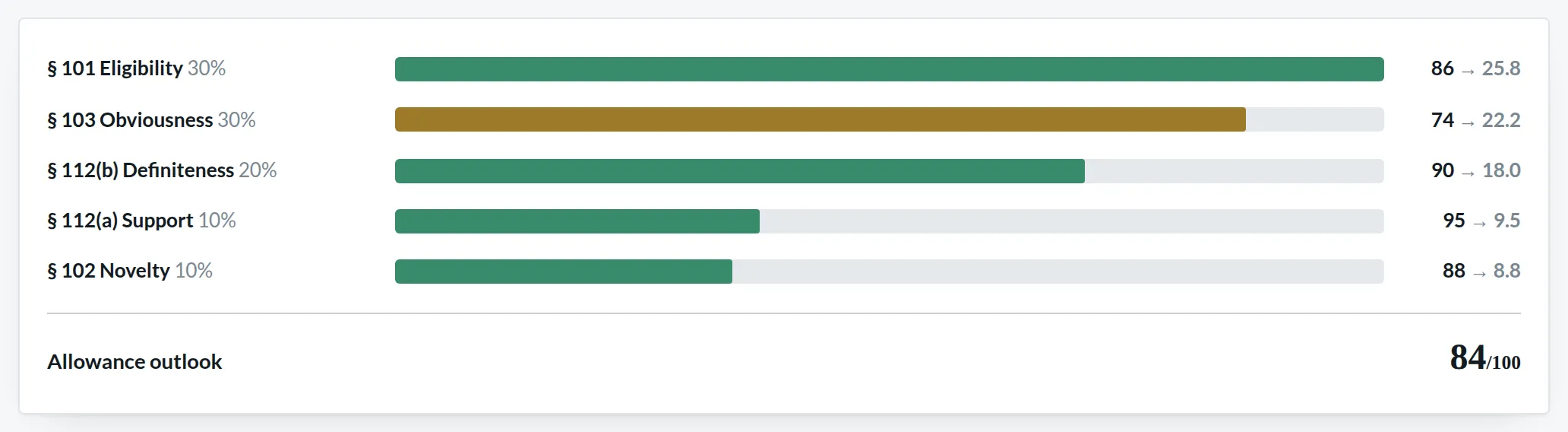
01 · The verdict
Where the application stands, in five minutes
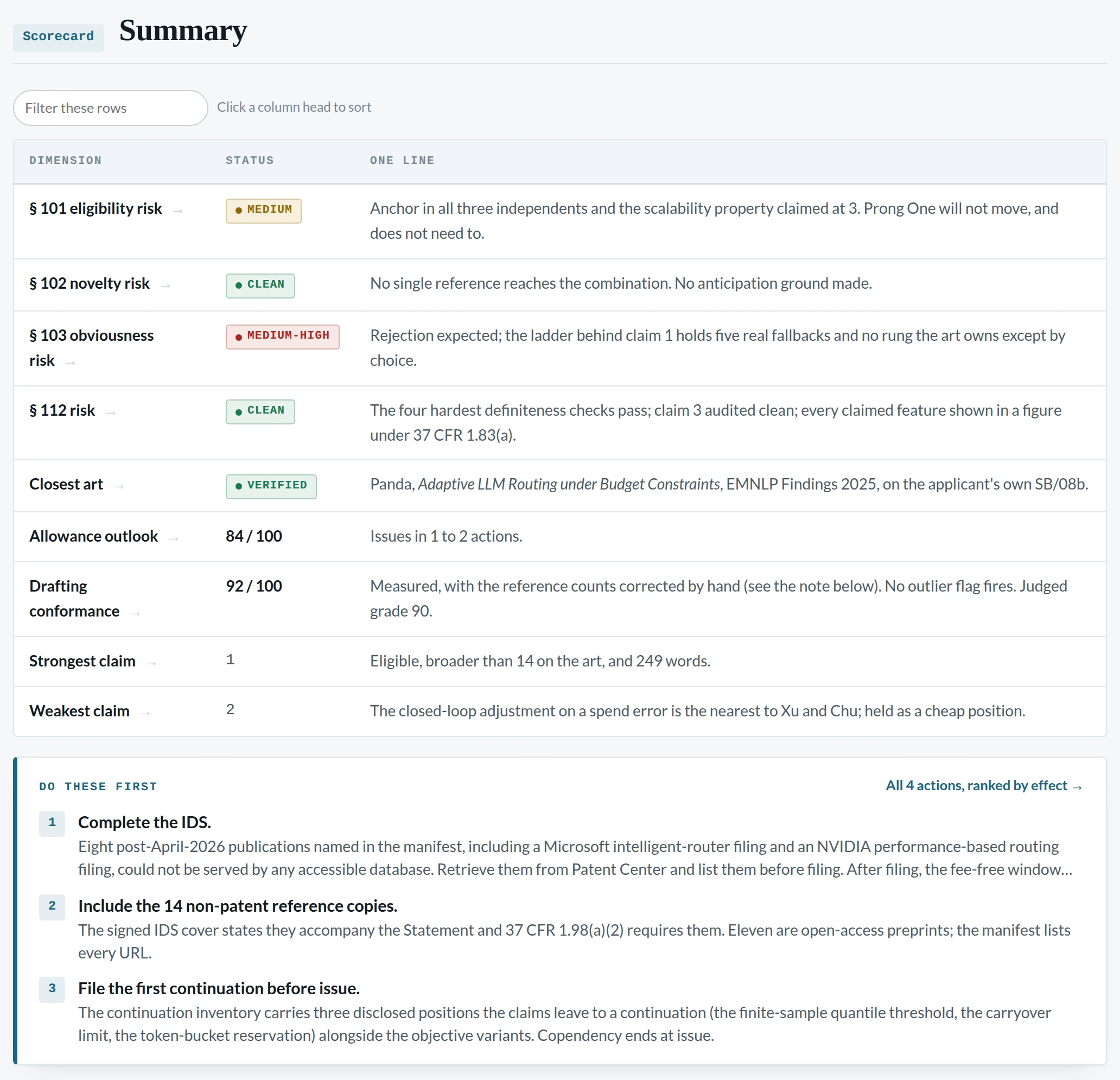
The report opens on the rejection you are most likely to get, whether it survives, and which dependent claim to roll up if it does. Then the allowance outlook, the drafting grade, and the office actions to expect against the field baseline.
- Read this first if you have five minutes: the one rejection, and the two responses already drafted
- What is already strong, and worth leaving alone
- The open items that need a fact rather than a fix
02 · The claims, mapped
Every claim, read on the cited art, limitation by limitation
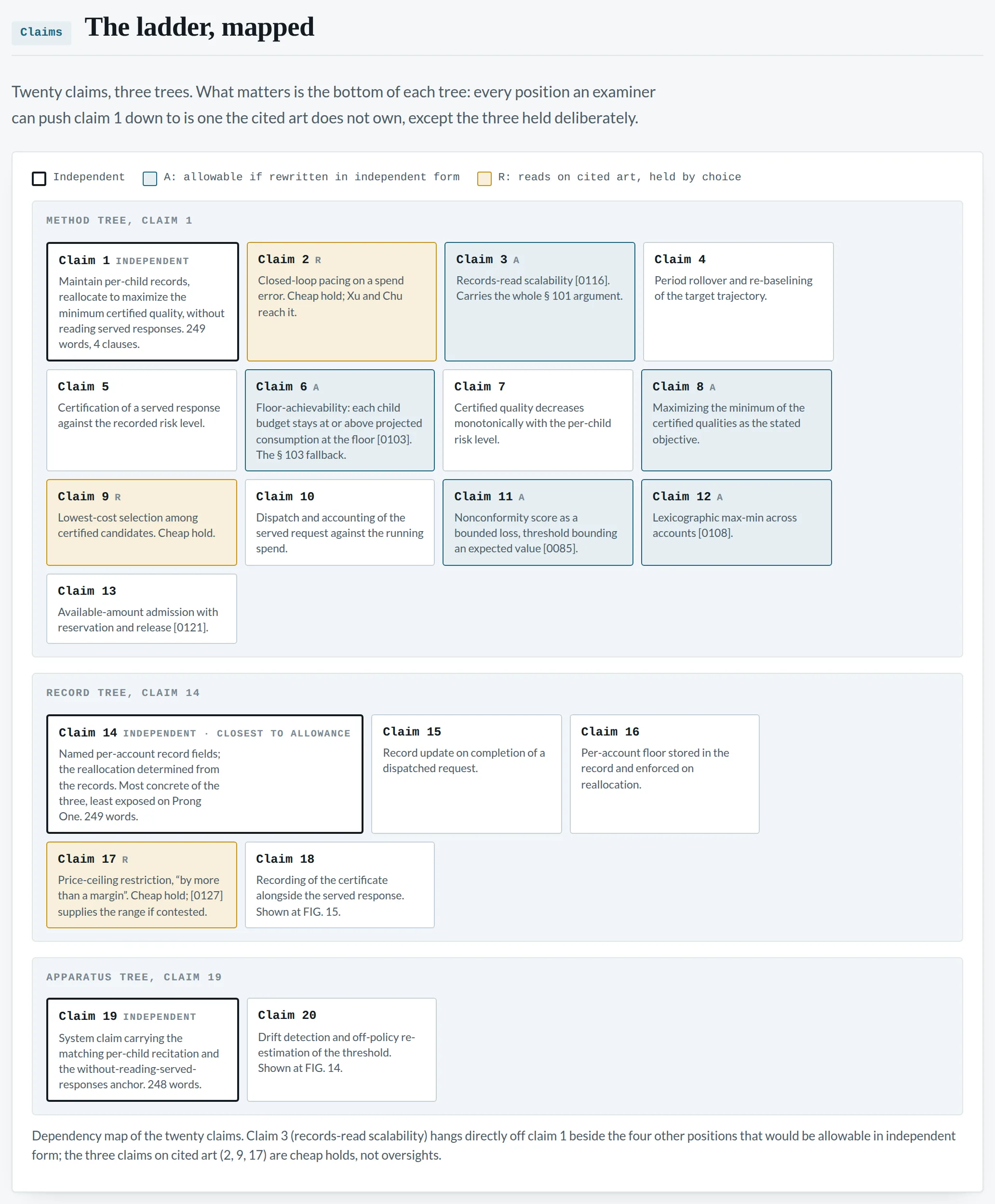
Under 103, claim 1 is charted against the primary and secondary references one limitation at a time: which reference teaches it, which reaches it only in part, and where the gap is. The dependency map shows the whole ladder, with the claims that are allowable in independent form and the ones that read on cited art and are held by choice.
- One row per limitation, the passage relied on quoted from the reference
- The gap named, and the dependent claim that closes it
- Twenty claims, three trees, every fallback position marked
Claim 1 over Panda in view of Angelopoulos and Deanlimitation by limitation
| Limitation | Panda | Angelopoulos | Dean |
|---|
| [a]per-child budgets allocated from a parent | teaches | teaches | in part |
| [b]a threshold calibrated to a risk level | in part | teaches | absent |
| [c]idle capacity borrowed across children | absent | absent | teaches |
| [d]the floor held by the quality actually served | absent | absent | absent |
The gap is [d]. Nothing in the art measures an account's service level by the risk level at which its requests are certified. Response drafted: roll claim 6 into claim 1 and argue the motivation to combine on the record Panda itself sets out.
Claims · the ladder, mapped
03 · The panel
Ten simulated examiners, every dimension, and where they split
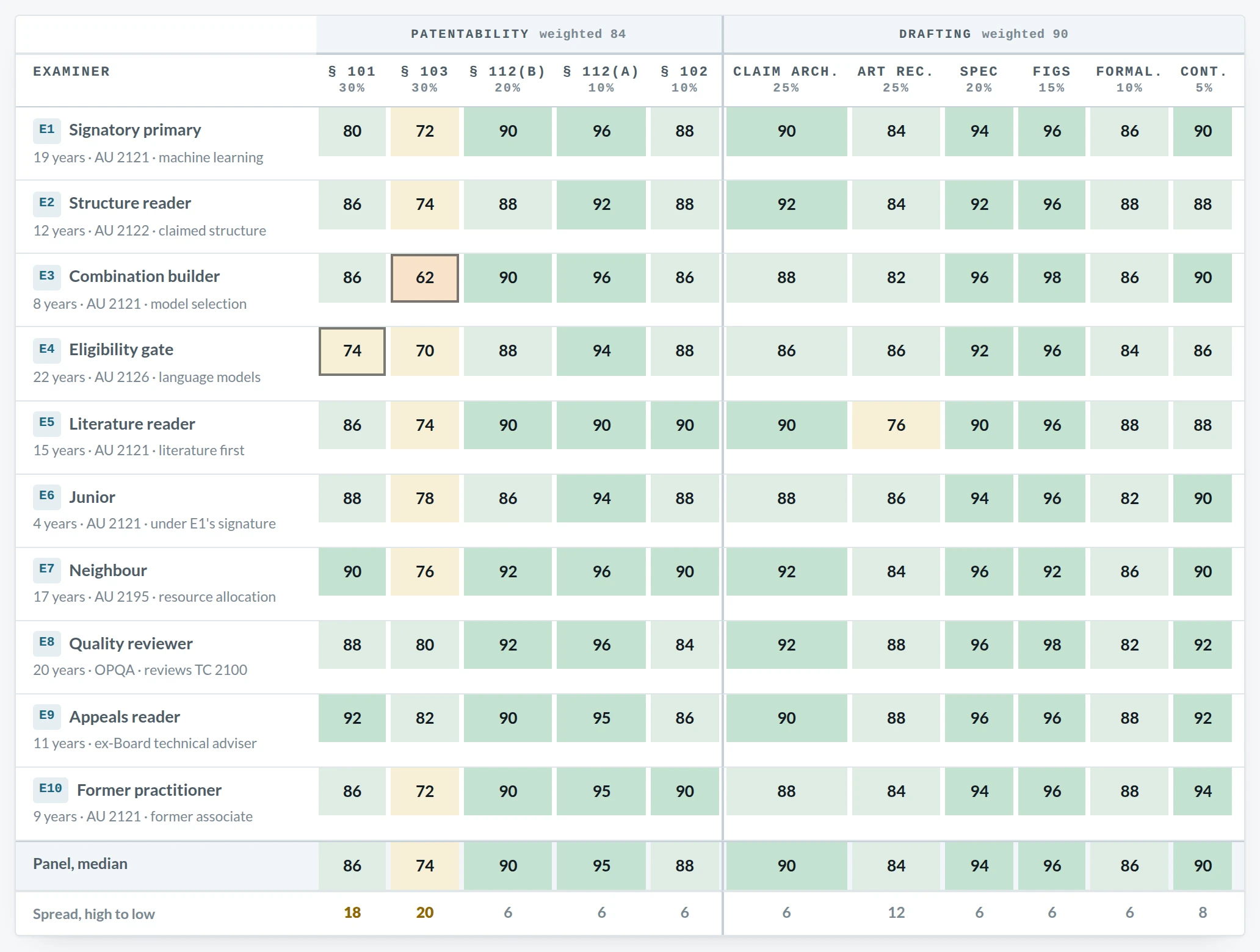
Each seat simulates a primary examiner from the art unit the application would be examined in, with the ground they search and what they read hardest for. Every one scores every dimension on their own; the matrix shows the spread, and the report says where the panel disagreed and why.
- Eligibility, obviousness, definiteness, support, novelty, claim architecture, the record, the specification, the figures
- Weighted into a patentability score and a drafting score, kept apart on purpose
- The same ten seats on every examination, filled from your application's own art unit
Panel · every examiner, every dimension
04 · The field
Measured against the applications your art unit allows
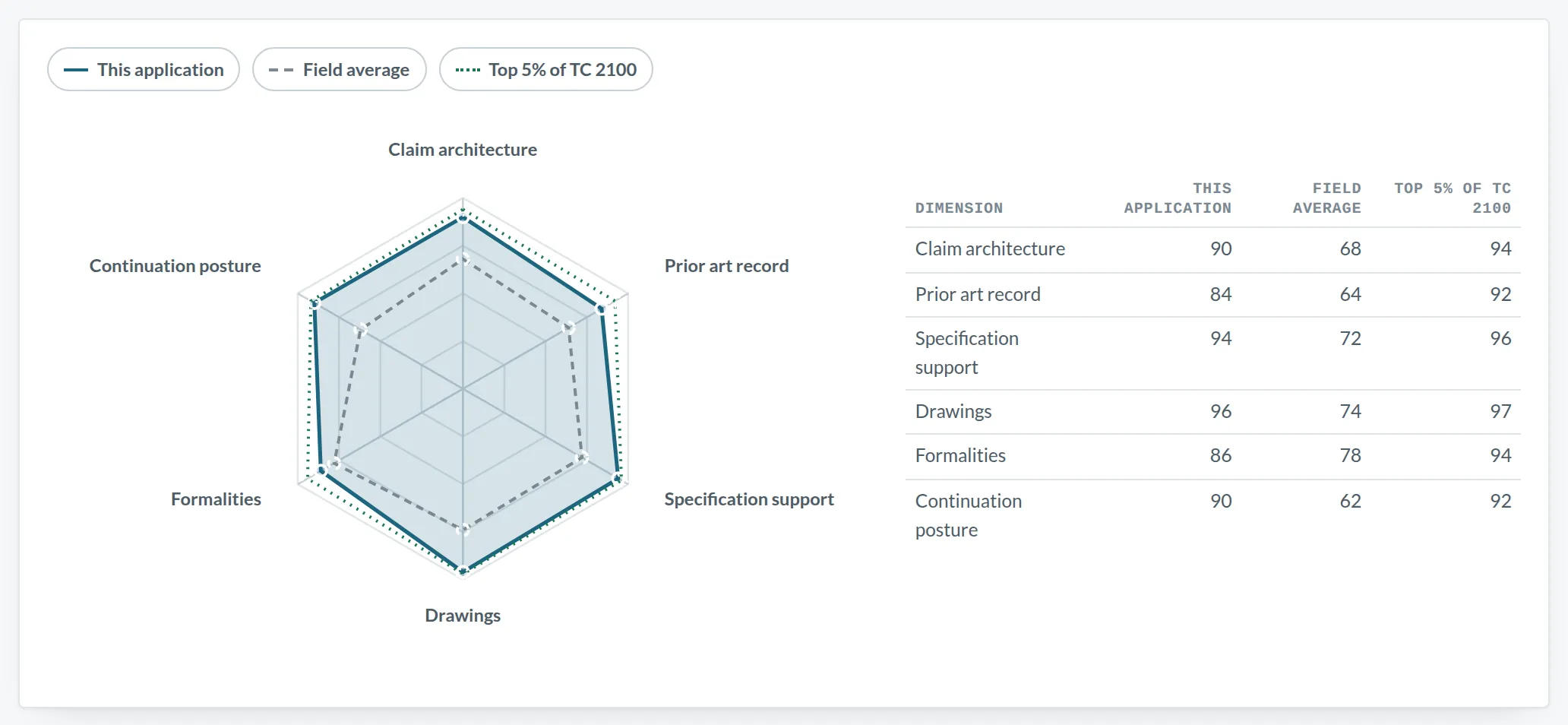
Eighteen measured quantities beside the population average and the top five percent for the technology center: specification length, figures, claim counts, dependents per independent, words in claim 1, references cited. The grade is out of 100, and the gaps that matter are the ones tied to a rejection.
- Claim architecture, prior art record, specification support, drawings, formalities, continuation posture
- Your application against the field average and the top five percent
- Calibrated on public USPTO data for the technology center
05 · The rejection and the response
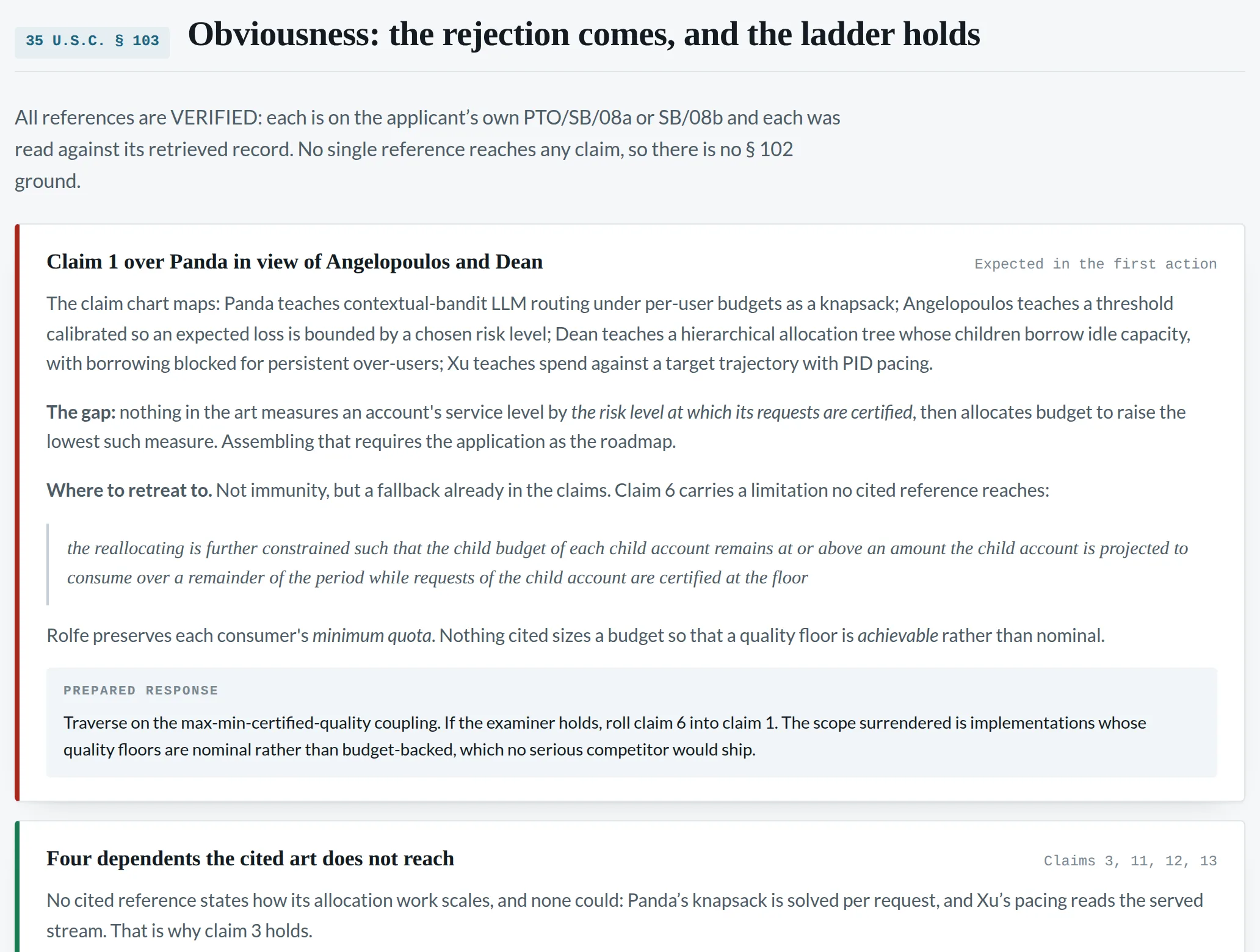
The 103 you will get, and the answer already drafted
The rejection is written the way the office writes it, on references that were retrieved and read against their own records first. Under it sits the prepared response: the amendment worded, traced to your specification by paragraph, and the argument that goes with it, priced in the scope it costs.
- Every reference verified before it is cited; anything unretrievable is named as a lead, not a rejection
- The dependents the art does not reach, with what each position is worth
- The fallback already in the claims, and where to retreat to if the examiner holds
06 · The forecast and the list
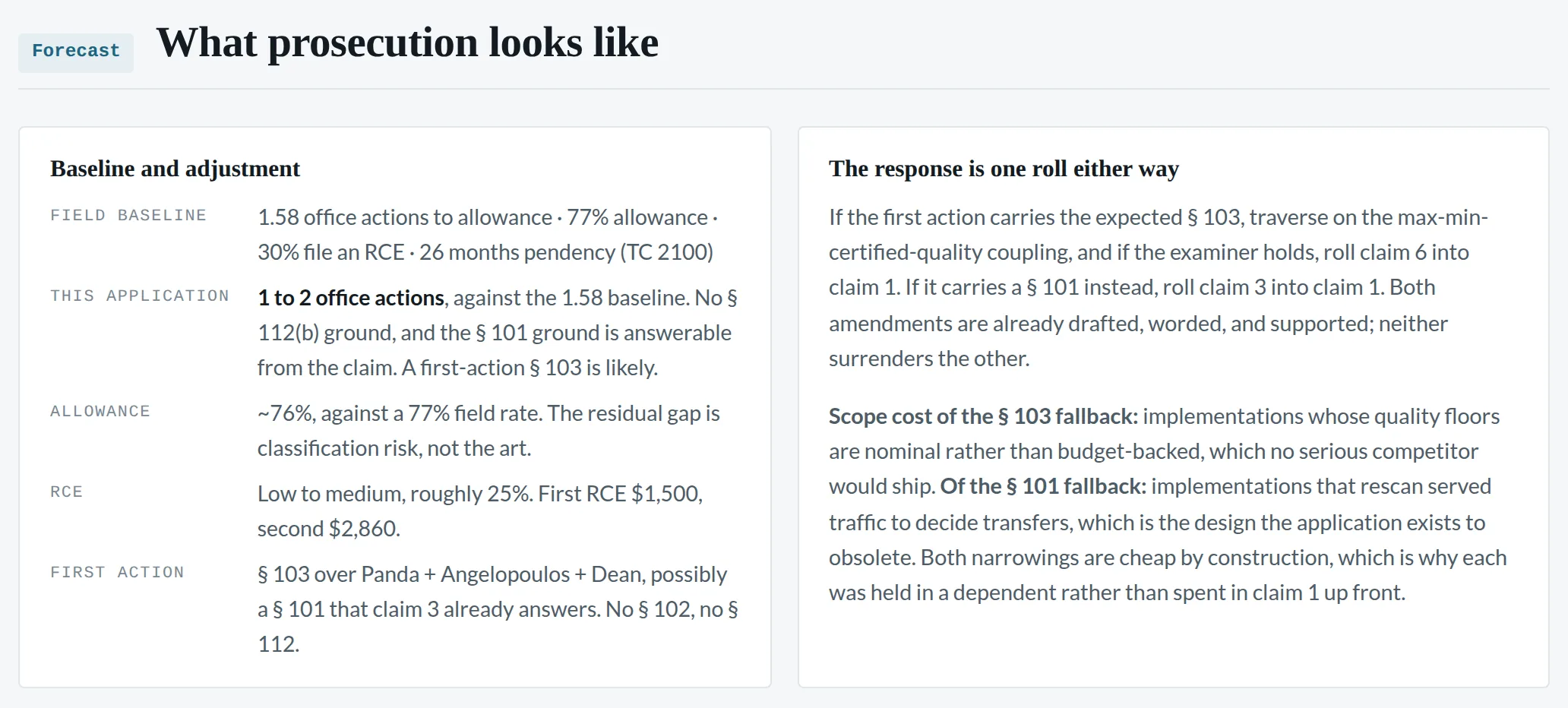
What prosecution looks like, and what is left to do
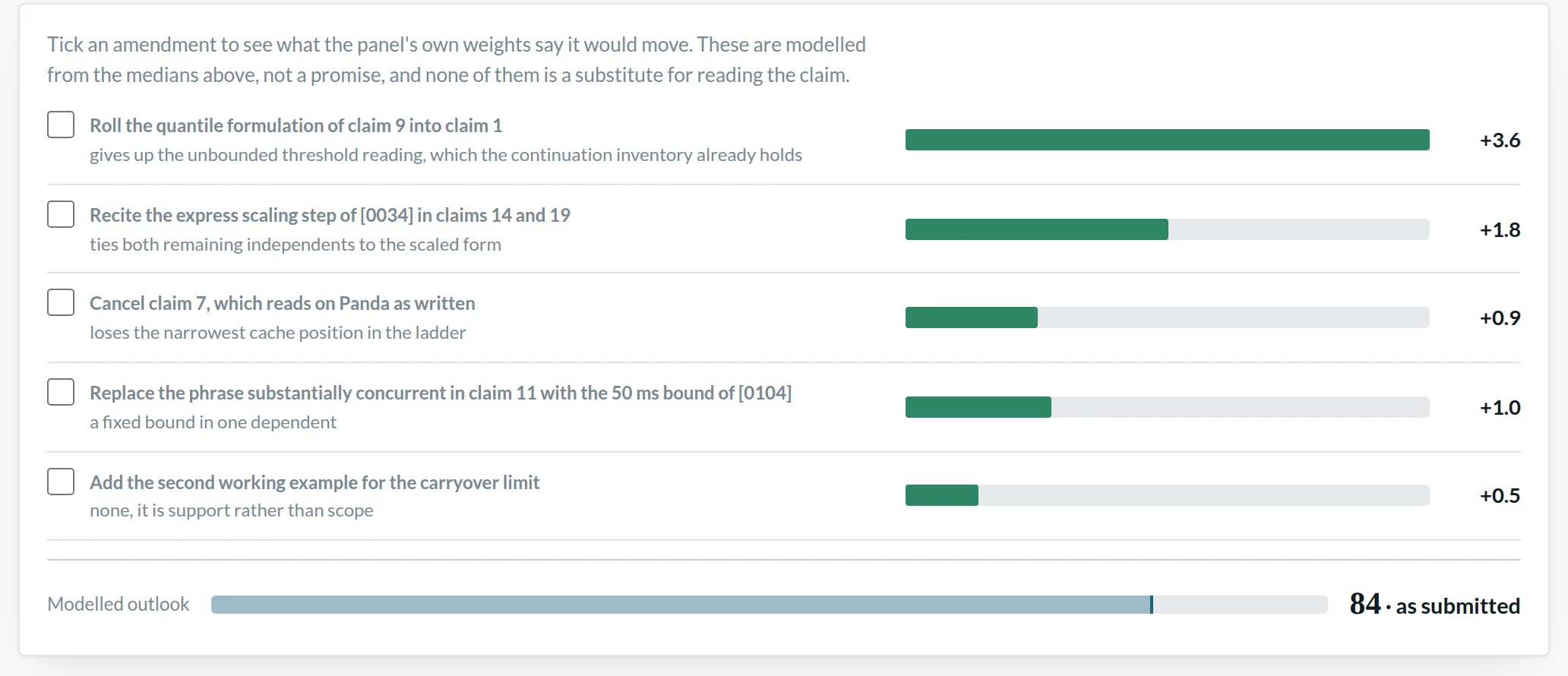
Office actions to allowance on the art unit's own numbers, the RCE risk, the first action expected, and the one roll that answers it either way. Then the actions ranked by effect on the outcome, and a sensitivity panel: tick an amendment and see what the panel's own weights say it would move.
- Baseline for the technology center, adjusted for this application
- Four actions, none of them a rewrite of the claims
- A summary table you can filter and sort
 PATLY.AI